
Manga Adaptations of Anime
Some of the most famous anime are adaptations of popular manga, but sometimes the adaptation process goes the other way around. Whether as a piece of advertising or a means of reaching a different audience, it’s quite common for original anime to be adapted to manga. And the results can be quite interesting! So let’s take a look at a few examples.
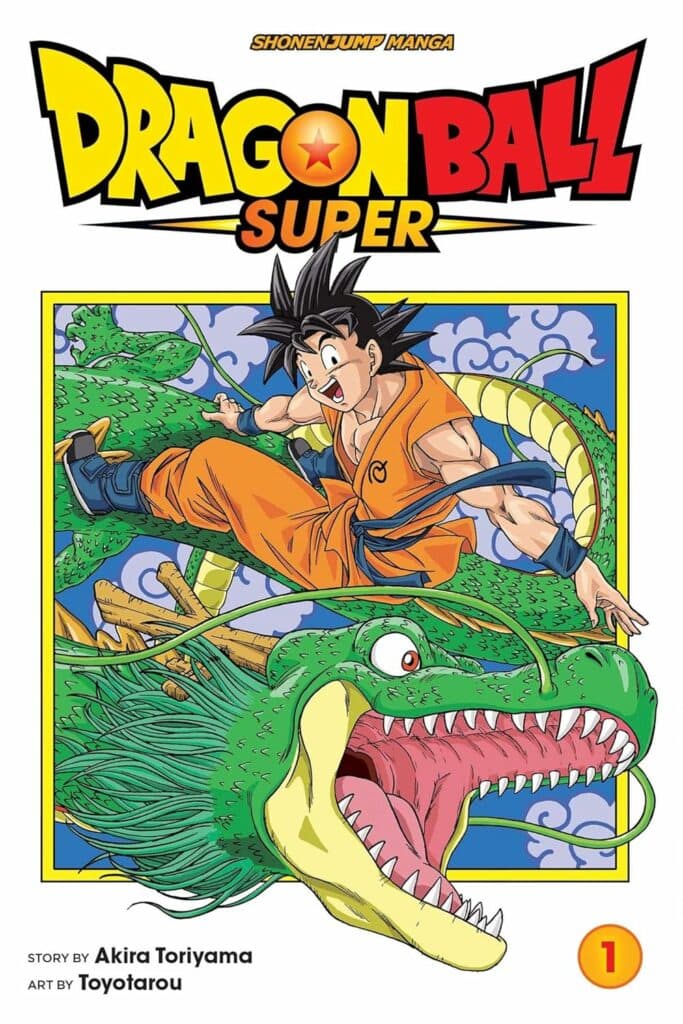
Dragon Ball Super
by Akira Toriyama and Toyotarou
Dragon Ball Super is the long-awaited sequel to Dragon Ball Z, and follows Goku’s continued adventures. While DBZ brought Goku off-planet, Super has Goku and friends encountering enemies from across time, the afterlife and the multiverse.
Like the anime, Akira Toriyama served as the supervisor and storywriter until his passing in 2024. Artist Toyotarou worked out the finer details of the manga’s story, much as the anime’s writers did for the television series. Since we have different writers working on said details, many of them are notably different, even if the overall story is largely the same.
I greatly preferred some of these small tweaks to the story over what happened in the anime. For example, the manga does a solid job of connecting Goku’s Ultra Instinct power-up to the lessons he’s learned from his previous mentors, which helps Ultra Instinct feel like a distinct technique rather than just another Super Saiyan form.
The biggest sell of the manga, however, is the additional story arcs. The Galactic Patrol Prisoner Saga (chapters 42–67) sees Goku and Vegeta recruited by the Galactic Patrol to take on an ancient sorcerer, while the Granolah the Survivor Saga (chapters 67–87) expands on Vegeta’s training under Beerus, the God of Destruction. Later storylines expand on the events of the film Dragon Ball Super: Super Hero and heavily feature the next generation of fighters, including Gohan, his daughter Pan, his brother Goten and Goten’s best friend Trunks.
The Dragon Ball Super manga has almost everything the anime has and more, so even if you’ve already seen the TV series, I still highly recommend giving the manga a look! And if you’re new to the Dragon Ball franchise, then I recommend picking up the manga that started it all!
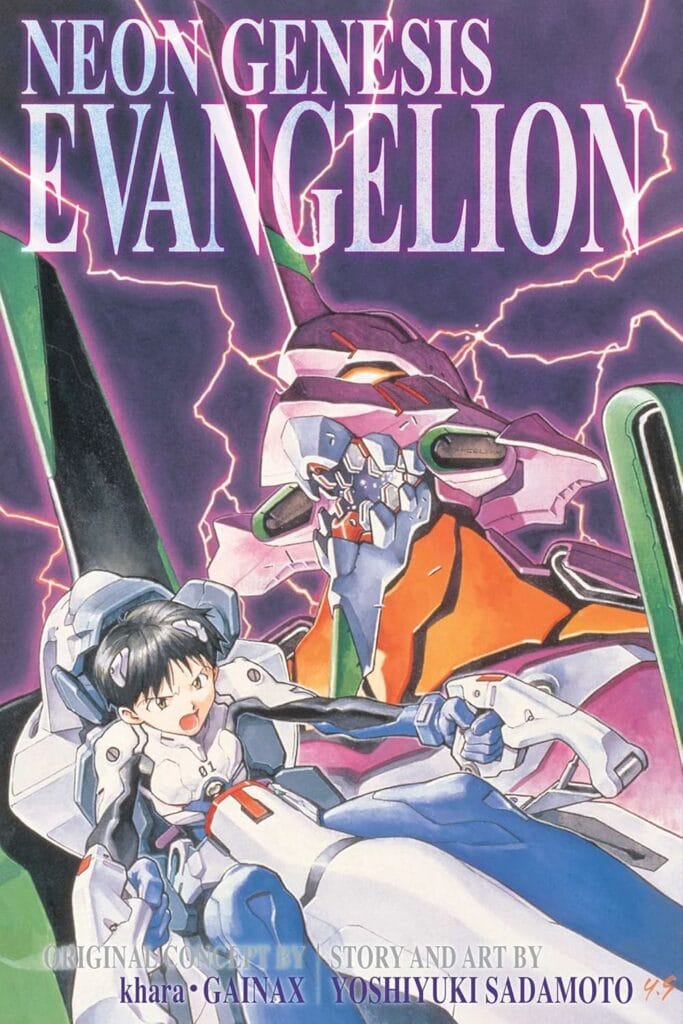
Neon Genesis Evangelion
by Yoshiyuki Sadamoto
One of the most influential anime of all time, Evangelion features a world under attack by monstrous creatures called Angels. The only thing that can effectively fight these Angels is giant robots called Eva, which are piloted by barely pubescent teenagers. The series is known for leaning hard into just how bad of an idea it is to put the fate of the world on the shoulders of traumatized children who are psychically linked to biomechanical weapons of mass destruction.
Like with Dragon Ball Super, Evangelion tells the same broad story but fudges the details. However, this has much bigger implications for a series like Eva.
Evangelion is the creation of Hideaki Anno, who had already garnered fame for his work on anime like Nausicaa of the Valley of the Wind and Nadia: The Secret of Blue Water. Eva is a deeply personal project for Anno-sensei, one that’s heavily influenced by his history of clinical depression. The anime received harsh reactions when it transitioned from a fun monster-of-the-week show to an introspective look at the self through Freudian psychology. This appeared to fuel Anno-sensei’s emotional spirals, and in turn, likely led to the show’s further turn towards Lynchian abstraction.
I can’t claim those aspects were removed for the manga, but they are undeniably filtered through the mind of writer and artist Yoshiyuki Sadamoto. Sadamoto-sensei is a good writer and artist, but he does not appear to share Anno-sensei’s tortured psyche. As such, the anime’s intense emotions are toned down a little. Characters like Shinji and Asuka still experience the burden of being soldiers in a war for humanity’s survival, but Shinji’s paralyzing depression and Asuka’s outlandish outbursts are both reigned in.
Your mileage will vary on whether you feel this is a positive change. If you want a piece of art that is undeniably an expression of the author’s raw emotions, then you’ll likely prefer the anime. If you want a story that is less abstract with characters who are more likable and easier to root for, then you’ll prefer the manga.
That said, a big part of the appeal of Evangelion as a franchise is the way it’s been rewritten and remixed a dozen times over, so there’s no reason you can’t appreciate both stories for what they are. There isn’t a single iteration of Eva that doesn’t have its fans. So give the manga a shot! And if you haven’t seen the anime before, you can borrow one of our Roku + Hotspot kits and watch it on Netflix!
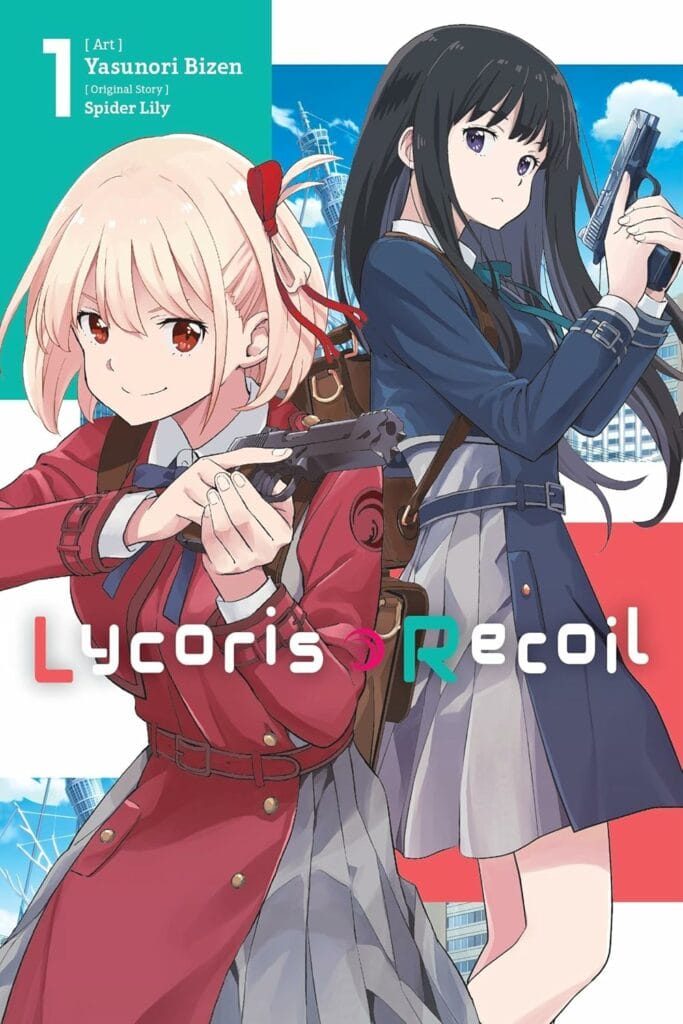
Lycoris Recoil
by Spider Lily and Yasunori Bizen
“Girls with guns” is a subgenre of action that delivers exactly what it promises. In live-action, this subgenre came to prominence with the works of Hong Kong legends Michelle Yeoh and Cynthia Rothrock during the 1980s, but on the animation side, it was the 90s and the 00s that served as the genre’s golden age. Works like Ghost in the Shell, Gunsmith Cats and Black Lagoon became the female-led successors to the ultraviolent anime of the 80s. Lycoris Recoil calls back to these classic shows and movies.
Chisato and Takina are the black sheep of the paramilitary organization known as Direct Attack. Though trained to be an assassin her whole life, Chisato refuses to kill her targets. Takina, meanwhile, is discharged from active duty for losing her cool during a mission. The two are assigned to LycoReco, a cafe that once served as a front for Direct Attack but now serves as a dumping ground for their undesirables. But when a new terrorist cell proves too much for Direct Attack, Chisato and Takina jump back into action.
This manga is probably the most faithful adaptation of its source material out of the ones I’m discussing in this post, so the main benefit of the manga over the anime is that you don’t need to pay for a Crunchyroll subscription to enjoy it, nor do you have to drop over $100 on an admittedly beautiful but rather pricy Blu-ray set. Even the manga’s art style is extremely faithful to its anime counterpart, making me wonder whether mangaka Yasunori Bizen worked on the anime as well.
This manga simply is Lycoris Recoil, but told through a different medium. And it’s a story that you should absolutely experience, no matter your preferred format! Chisato and Takina have a great sunshine-and-grumpy dynamic, with Chisato’s cheerfulness and selflessness deeply impacting the dark loner Takina. The action is stellar, even in manga form, and the supporting characters like Chisato’s father figure, Mika, tie everything together nicely.
Lycoris Recoil isn’t the deepest story you’ll ever read, but it’s a fun, competently executed action series with a few emotional moments that really pack a punch. Give it a try!
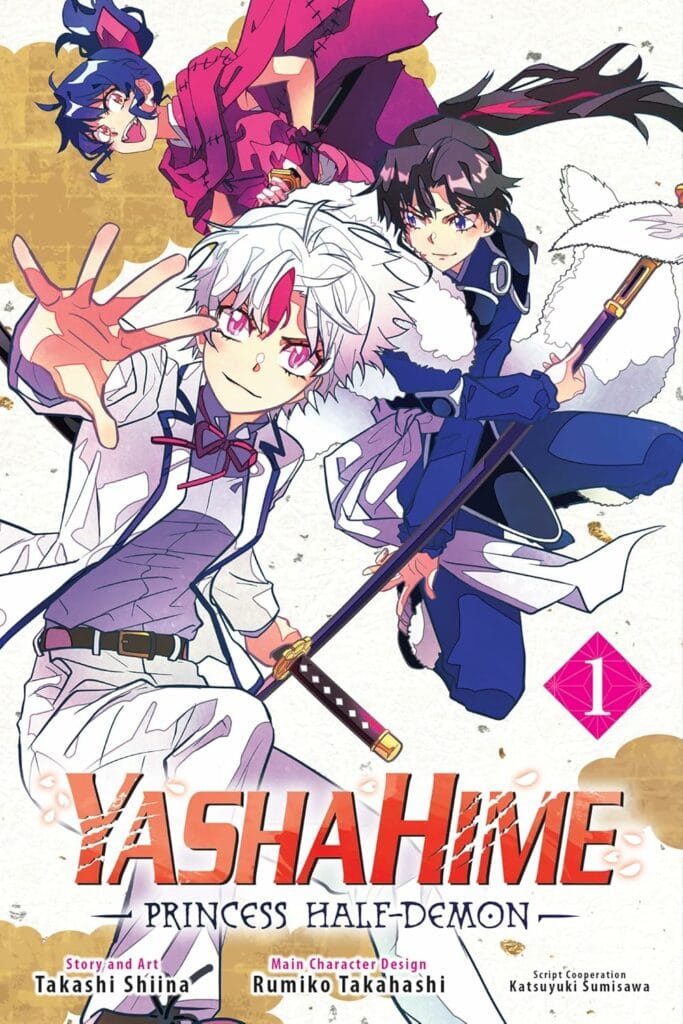
Yashahime: Princess Half-Demon
by Takashi Shiina
Finishing things off with another sequel, this time we have the follow-up to the classic late 90s manga and anime Inuyasha. The original series followed the adventures of half-demon Inuyasha and reincarnated priestess Kagome as they traveled through Japan’s Sengoku period in search of the shards of the wish-granting Shikon Jewel.
Yashahime follows a new generation of adventurers. Naturally, Kagome and Inuyasha’s daughter, Moroha, is along for the ride, but the central focus is on the daughters of Inuyasha’s half-brother, Sesshomaru. During an attempt to assassinate the young girls, twins Setsuna and Towa became separated. Setsuna remained in the Sengoku period, while Towa was thrown forward in time to modern-day Japan, where she is adopted by Kagome’s family.
In their teenage years, the girls are reunited, but it isn’t all good news. The weakening of the barrier between the past and present is an ill omen, and demons are after a new sacred treasure known as the Rainbow Pearls. The girls are tasked with finding the source of the problem while also dealing with their grandfather’s old enemies.
The Yashahime anime had a mixed reception. While critics found the central cast of three girls highly charming, the series suffered from a slow pace, repetition of the MacGuffin-chasing plot from the original series and a preoccupation with the “Mystery Box” approach to storytelling popularized by JJ Abrams.
For example, the original cast of Inuyasha is gone without explanation for most of the show’s runtime, and their absence lacks any sort of clues that might make this a compelling mystery. Similarly, the identity of Setsuna and Towa’s mother is presented as if it’s the grand mystery of the series. However, as half-demons, their mother must be human, and there was only ever one single human character who their father ever had an emotional connection with. Paraphrasing one of my friends and co-worker Jason, it felt as though the series was more concerned with generating social media discussion than telling its story.
Now, I’m not just mindlessly bashing the anime version. I think a lot of the criticisms of the anime are overblown, but there is a reason I bring up the mixed reception.
Like every other manga I’ve talked about in this blog post, the Yashahime manga follows the same broad plot as its anime counterpart, but makes small, drastic changes to the details. And of the manga I’ve discussed, Yashahime benefits the most from these changes.
The manga gives you hints at what happened to the main cast of Inuyasha, even if it doesn’t tell you outright. Instead of the three girls being a trio of strangers, Moroha and Setsuna know one another and were raised together like sisters. Instead of the Rainbow Pearls being a carbon copy of the Shikon Jewel, they are now less of a MacGuffin that needs to be collected and more of a background detail informing why so many demons are trying to hunt down three teenage girls. You even get to see fan favorite characters like Miroku and Sango back in action much earlier than you did in the anime!
I think the anime version of Yashahime is pretty good for what it is, but I absolutely adore the manga adaptation. The gorgeous art by Takashi Shiina is a delight, and the hefty fifty pages per chapter ensures each chapter is a satisfying read with plenty of meat on its bones. This manga has great action scenes, moving drama and delightful humor. The charm of our three leads shines even brighter in the manga than it does in the anime.
I keep comparing this manga to its anime counterpart because I really want Inuyasha fans who didn’t care for Yashahime to give it a second chance with this manga. The manga adaptation addresses every issue I had with the anime and amplifies the aspects of the anime I loved. Yashahime: Princess Half-Demon is a delightful sequel to a classic story, so please give it a shot.
And if you’ve never read the Inuyasha manga before, we have that, too!