
Firefly Wedding: Dark Romance in Old Japan
It’s the Meiji Era of Japan (1868–1912), and less than a dozen years after the fall of the samurai. Satoko knows her worth as a woman in upper-class society. She is meant to marry a good, wealthy husband for the sake of her family’s reputation and social standing. Being a natural beauty and a refined young lady, Satoko certainly has the means to do just that. The only thing slowing her down is her refusal to conceal the heart condition she was born with.
A far more significant snag in her plans comes along when she’s kidnapped by a gang that plans to kill her when the clock strikes nine. The man tasked with doing the deed is the assassin Shinpei, who shows up already covered in blood.
Satoko bargains with Shinpei. She uses the one thing the gang can’t offer him: marriage. With the promise of marrying him, Satoko escapes with Shinpei’s help—only to discover that she’s on Goddess Island, an illegal pleasure district far off the coast of Japan.
To escape the island, Satoko must come out of the sheltered cage she’s lived in all her life. She must also continue to feign interest in the eccentric and temperamental Shinpei.
But when it comes to these kinds of stories, there’s always one problem with feigning interest in a man: it only remains “feigning” for so long.
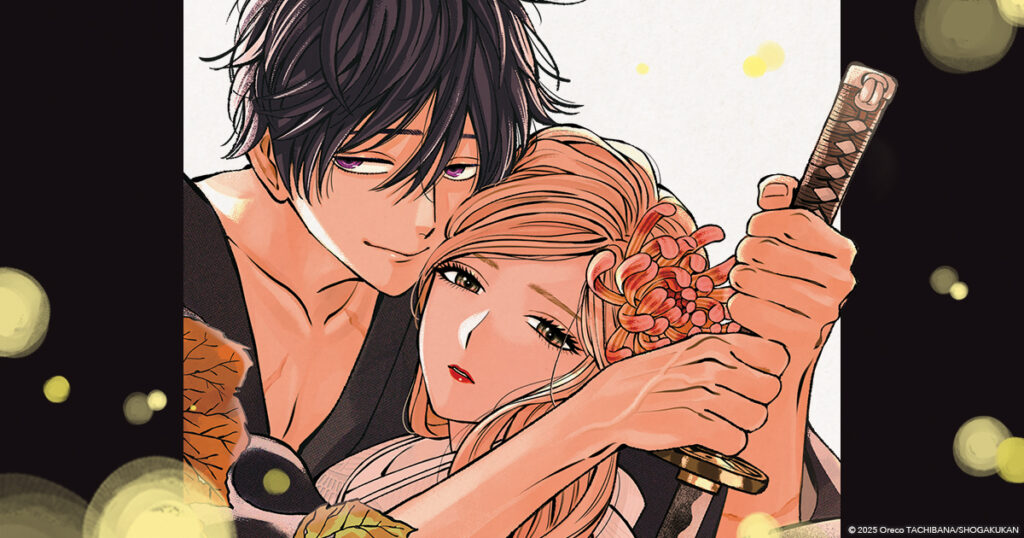
Quick Review:
Firefly Wedding is an intense romance story between a strong-willed female lead and the assassin who’s obsessed with her. Despite coming from opposite ends of the social hierarchy, the noblewoman and the assassin have more in common than either could have imagined.
Oreco Tachibana’s skillful storytelling draws both horror and humor from our odd couple’s interactions. Tachibana-sensei’s masterful art brings the romance, drama, suspense and humor of the story together into a cohesive whole.
This manga engages with intense themes in a more approachable manner than many of its dark romance contemporaries, making it an excellent starting point for adult readers who want to dip their toes into this alluring subgenre.
Find a Copy of Firefly Wedding
The Rise of Dark Romance
Dark romance as a subgenre is one of those ideas that is both new and ancient. Literature is no stranger to love interests who do monstrous things. Or love stories that take place in settings filled with death, abuse, sexual assault and monsters both literal and figurative. Classics such as Jane Eyre, Carmilla, Flowers in the Attic and even Beauty and the Beast all feature elements that would go on to influence the modern trend of dark romance, which includes highly popular titles such as Haunting Adeline, Lights Out and Corrupt.
These new titles, however, go even further with the taboo of loving someone who’s done—and often continues to do—horrible things. Obsession, co-dependency, stalking, kidnapping and murder are not obstacles to overcome, but vices to be reveled in. Traditional romance introduces characters like Edward Rochester or Christian Grey with the implication that they can and will be better by the end of the story. It relies on the idea that love, faith and grace are transformative acts. Dark romance, conversely, tends to see our protagonist change to fit into their new lover’s dark world.
Graphic novels, especially manga, are no stranger to dark romance. Yakuza Fiance, Black Bird and The Flowers of Evil have all received critical praise for their compelling inclusion of taboo subject matter. These titles can range from cerebral psychological thrillers to campy schlock, but the core appeal is the same: they provide the opportunity to engage with dangerous and taboo acts from the safety of your reading nook.
In this sense, Firefly Wedding is simultaneously part of a long tradition and part of the cresting wave of dark romance’s recent popularity. It’s a great read for anyone who wants to dip their toes into this alluring subgenre.
Dark Romance Lite
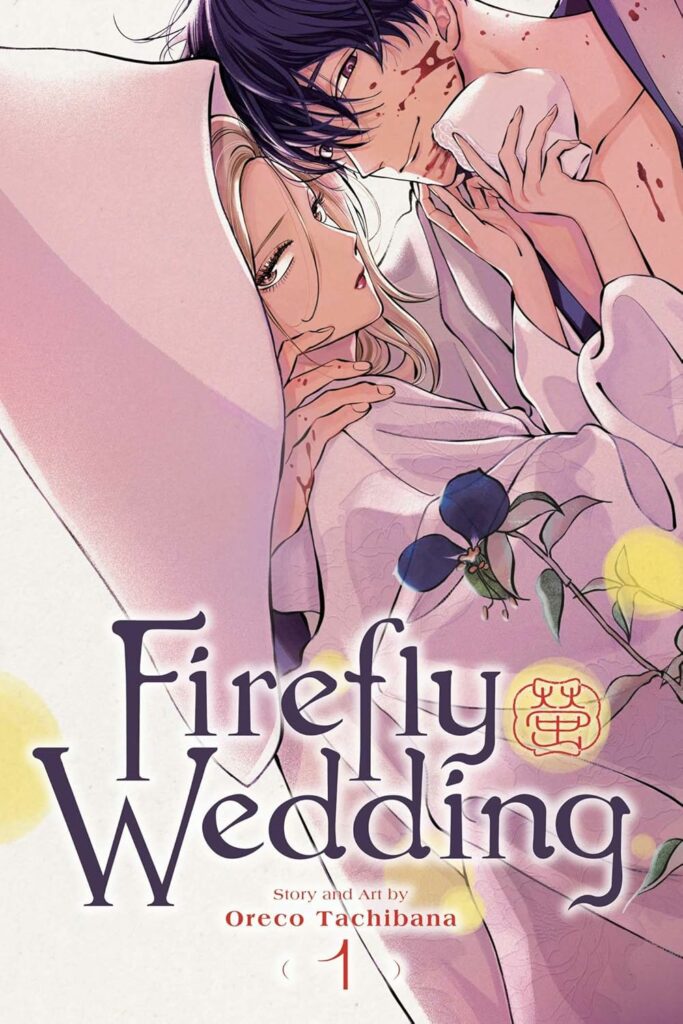
What makes Firefly Wedding a good introduction to dark romance isn’t necessarily that it’s an illustrative example of the genre, but rather that it straddles the line between traditional romance and the new wave of dark romance. The Haunting Adeline and the other titles I referenced in the previous section are far more intense reads than this. Firefly Wedding, by comparison, feels like your typical will-they-or-won’t-they romance with a few gallons of blood splashed on top.
Often, the most disturbing part of Shinpei’s violent acts is the aftermath, rather than the acts themselves. The violence in Firefly Wedding is either shrouded in shadow or presented in an over-the-top fashion that hardly looks like any sort of real-life violence. The violence is graphic, but almost cartoonishly so. It brings to mind fun 80s action flicks rather than intense psychological thrillers.
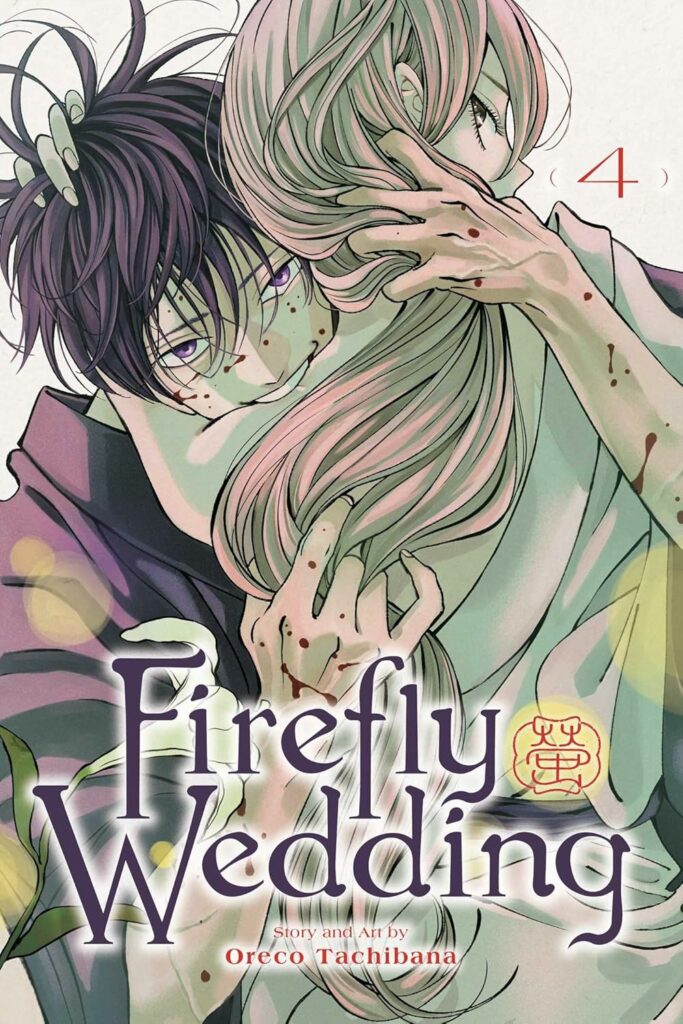
However, all of this violence is followed by Shinpei lovingly embracing Satoko while covered in blood, sword still in hand, utterly oblivious to the terror in her eyes. This story relies more heavily on disturbing implications than outright depiction, and that’s more approachable for a lot of readers.
For many readers, another crucial part of balancing dark stories is to provide a contrast between hope and despair. Even Shakespeare’s greatest tragedies will lighten the mood with his signature wordplay and wit. Firefly Wedding finds its balance with humor as well, sometimes playing Shinpei’s flippant attitude toward human life for macabre laughs.
More than that, however, the story gives us hope by empowering Satoko with tools to potentially make her way off of Goddess Island. Though she lived a sheltered life as a sickly noblewoman, she quickly learns that her determination, good looks and refined skills in dancing and entertainment can help her to survive and potentially thrive on the island. Satoko is in a highly vulnerable situation, yet she finds strength in the fact that escape is indeed possible.
Our Leading Lady
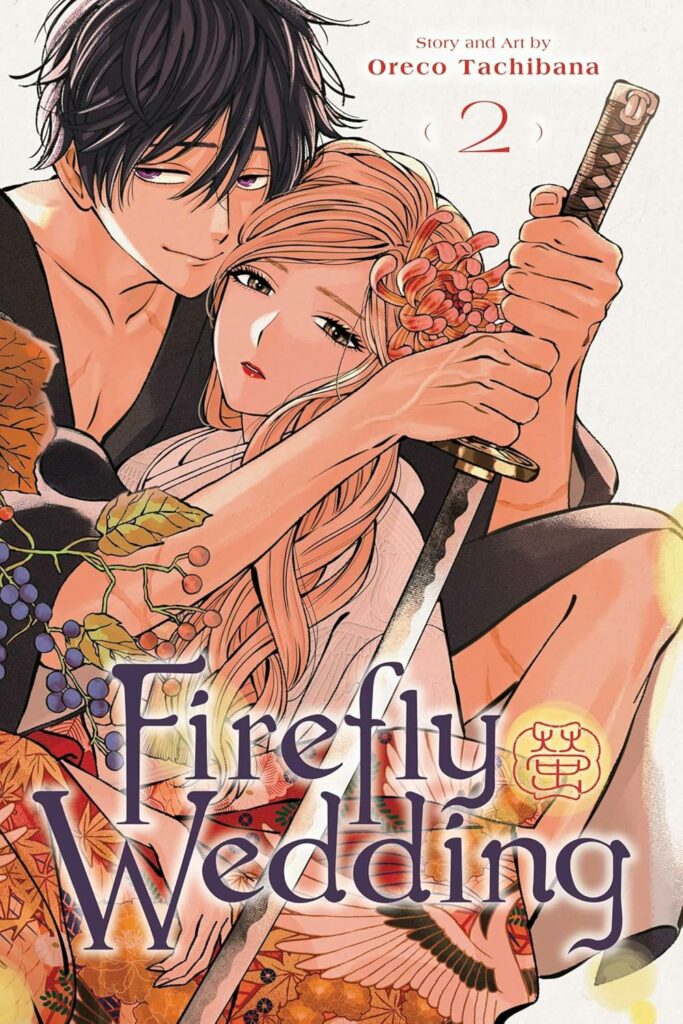
Our point of view character is Satoko, and that on its own is quite remarkable. In fiction, it is common for terminally ill characters, especially women, to be little more than an accessory to the main character. They are treated less like a character and more like the inciting incident for the main character’s journey.
These stories have value, of course. Being the one left behind, forever changed by a love taken from you far too soon, is an emotionally intense experience worth telling. Nevertheless, it is frustrating to so consistently see terminally ill characters relegated to a supporting character in someone else’s story.
In this regard, Satoko is a breath of fresh air. Despite her circumstances, Satoko turns out to be a highly active main character who grasps what little agency is in her reach.
Satoko starts out determined to marry well for her family’s sake, but she is only willing to do so on her own terms. Knowing her father isn’t telling any suitors about her illness, Satoko constantly undermines her own marriage arrangements. Later, when Satoko finds herself on Goddess Island, she fights with what tools she has so that she might survive and reunite with her family. She has a strong sense of duty to her family and to others, but she has equally strong principles that she won’t violate just to fulfill that duty.
Firefly Wedding is Satoko’s story, and she’s taking a remarkable amount of control over it despite everything that stands against her as a woman with a terminal illness in the 19th century.
The Love Interest
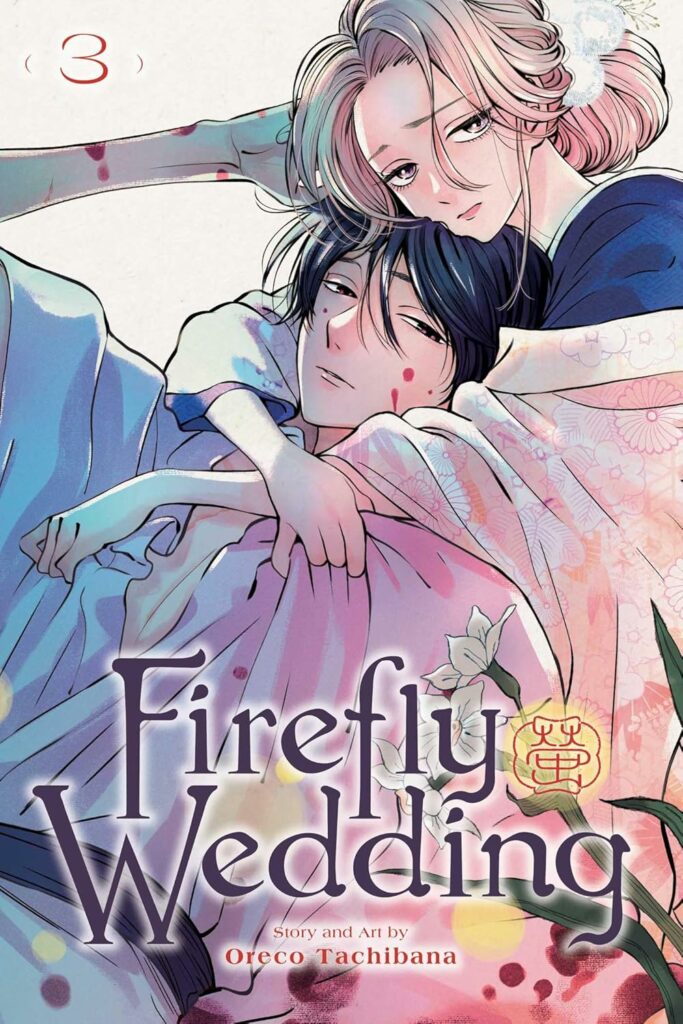
Shinpei is a mystery for much of the first and second volumes. He grew up on Goddess Island, born to a sex worker who died while he was young. He enjoys his work as an assassin and tends to lean toward killing as the first (and best) option to deal with his problems. But most people don’t know this side of him.
The people of Goddess Island know Shinpei as the bodyguard at the local brothels. As such, he’s highly admired, especially by women, but only because no one knows the real Shinpei. This lack of a deeper connection has made him an extremely temperamental and lonely man, someone who is desperate to be loved, scars and all.
This can be a tricky character to have as a male lead in a romance, and I’m not referring to the fact that Shinpei is an assassin.
The concept of a career assassin is abstract enough that your average reader isn’t going to consider that to be much of a barrier to finding the character endearing. For example, Yor Forger in Spy x Family is an assassin, but she’s one of the most beloved manga characters in recent years. We don’t interact with assassins in our everyday lives, so there’s no personal discomfort to be had.
On the other hand, a temperamental man-child who has never learned to process his own emotions is a type of person you could encounter any day. It’s a flaw that hits a bit too close to home for a lot of readers. And while not every character needs to be likeable, the love interest in a romance story generally needs to be desirable.
Yet it’s also wild passion that makes this kind of love interest enticing. Watching one character become another’s object of obsession is the exact kind of fantasy that romance fiction allows us to explore safely.
With Shinpei, that obsession is tinged with genuine affection for Satoko. And it’s his affection that keeps him from becoming the villain of the story. Every time Shinpei tries to be the bad guy, he’s shut down by the smallest things Satoko does. Whether she’s angrily admonishing him or showing her vulnerability, Satoko is able to tame Shinpei by simply being her authentic self. And that desire to be one’s authentic self is also a powerful fantasy.
Scars and All
Finally allowed to be their authentic selves around someone, Shinpei and Satoko quickly develop a deep empathy for one another. As impossible as it may seem, this noblewoman and this assassin have more in common than either imagined. Shinpei has a palpable desire to be accepted and loved for who he is, and it’s clear that Satoko craves the same thing.
Despite declaring her need to marry a well-off man before she dies, Satoko refuses to entertain marriage proposals if her father hides her sickness from the suitors. On the surface, it appears to be a moral choice. She doesn’t think it is fair to a potential husband to conceal the illness. But as I continued to read, it became increasingly clear that this wasn’t the whole picture. Like Shinpei, Satoko yearns to be loved and accepted, scars and all.
Their respective baggage is represented by literal scars. Shinpei’s body is covered in numerous small, thin scars, while Satoko bears a massive and deep scar down the front of her chest. For her entire life, this scar was Satoko’s shame. It was a blemish marring her otherwise perfect beauty. But around Shinpei, Satoko finds that she can bear her scar. She even brags about how much bigger and cooler it is.
So Satoko might be trapped on Goddess Island, but with Shinpei, she has a measure of freedom she’s never experienced before. She’s free to be herself for the first time.
A Seasoned Artist
This series is written and illustrated by Oreco Tachibana, and her illustrations effectively tie together everything I’ve been discussing into a neat little package. Drama, romance, action, suspense and humor are all elements that Tachibana-sensei’s art expresses masterfully.
This is Tachibana-sensei’s second serialized manga after Promise Cinderella, which ran from 2018 to 2022. As a result, Firefly Wedding is the product of a seasoned professional, and it shows. The covers alone are beautiful, sexy and disturbing—and they instantly drew me to this series.
One of the most impressive features of Tachibana-sensei’s art is her humor. She brings a macabre sense of humor to the story by presenting Shinpei as a terrifying monster in one panel and a goofy little guy in the next. Tachibana-sensei can incorporate this kind of stark tonal shift several times in a single page and make it work. This requires an artist who has developed a strong understanding of how sequential art works.
Conclusion
Firefly Wedding is a great read with a compelling leading lady who asserts herself despite her oppressive environment. Its leading man is a wild card that Satoko manages to tame, if only just. The series blends romance, action-thriller and humor to craft a story that’s as fun as it is dark. Despite their disparate backgrounds, Satoko and Shinpei bond with one another in their shared need for acceptance—he a man with a thousand sins carved into his flesh, and she a woman clinging desperately to life, no matter the cost.
If you’ve ever wanted to dip your toes into romance stories that indulge in graphic violence and engage with taboo and dangerous themes, Firefly Wedding is a great place to start.