
Magical Girl Manga!
2026 is a big year for magical girls! Earlier this year, Pretty Guardian Sailor Moon was a part of Universal Studios’ Fan Fest Nights, bringing the iconic character to the Florida theme park. Meanwhile, the 80s classic Magical Princess Minky Momo will soon see its first animated adaptation in over 30 years. And finally, in the fall, we’ll see the long-awaited debut of the Magic Knight Rayearth remake, as well as the even-longer-awaited premiere of the next Madoka Magica movie, Walpurgisnacht Rising.
That’s all the excuse I need to talk about some magical girl manga you should be reading!
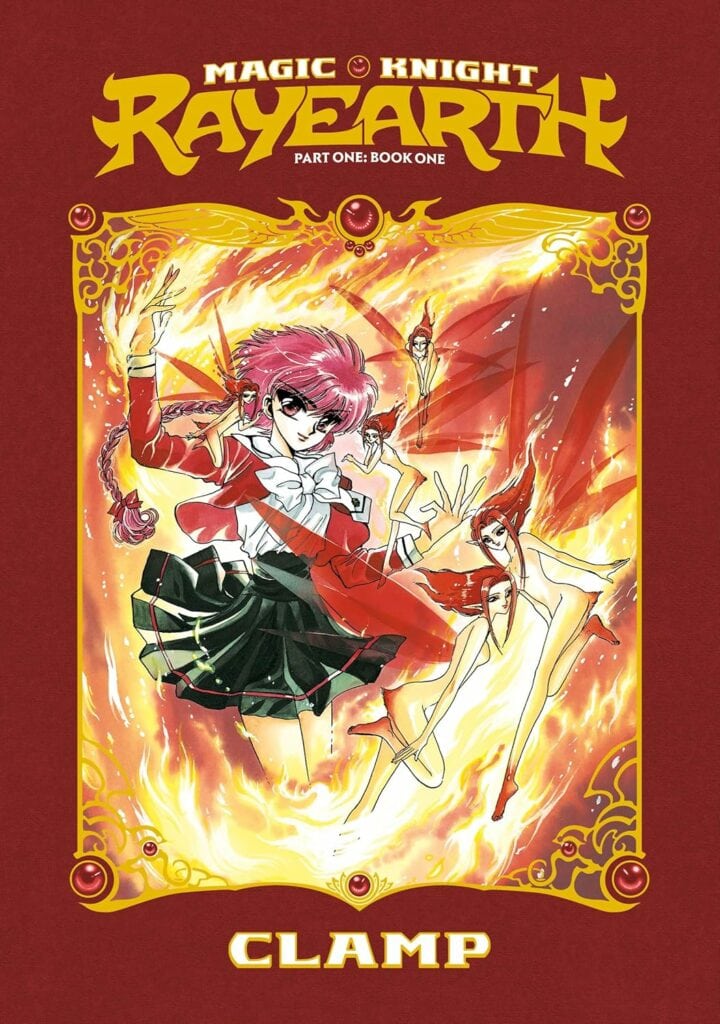
Magic Knight Rayearth
By CLAMP
We’re starting off with a classic, but also a series that shows off the flexibility of the magical girl genre. Combining elements of magical girls, mecha and portal fiction, Magic Knight Rayearth sees our three heroines transported to the world of Cephiro, where they are tasked with saving Princess Emeraude from the clutches of high priest Zagato. Over the course of their journey, however, the girls learn that the truth is more complex than what they were told.
Our leads are a classic sort of trio: earnest but headstrong Hikaru, talented but short-tempered Umi and intelligent but timid Fuu make up the heart, the brawn and the brains of their team, respectively. Over the course of their journey, they learn from one another and grow.
This type of trio is a well-worn dynamic representing brains, brawn and heart. However, using such a well-known trope can be a double-edged sword. Familiarity can be comforting, but it can also be tedious. A creator needs to spice up the familiar with new elements, or execute the old cliches so well that the compelling storytelling prevents boredom from ever settling in.
CLAMP has no issue delivering on both points. By 1993, the women who make up this now-famous manga artist group had honed their skills on the indie comics scene throughout the 1980s, so crafting a compelling story was well within their skill set. And these artists add plenty of flavor to Rayearth by combining several different genres to provide plenty of action, comedy and drama.
You can check out the manga in Pinnacle’s collection, though copies are limited at the moment. That being the case, I’d like to also bring your attention to the official TMS YouTube channel, where the entire 90s animated series is available for free (with ads). Please bear in mind that the anime makes heavy use of strobing lights, so please exercise caution if you have photosensitive health conditions.
And for more magical girl adventures from CLAMP, check out Cardcaptor Sakura and its various spin-offs!
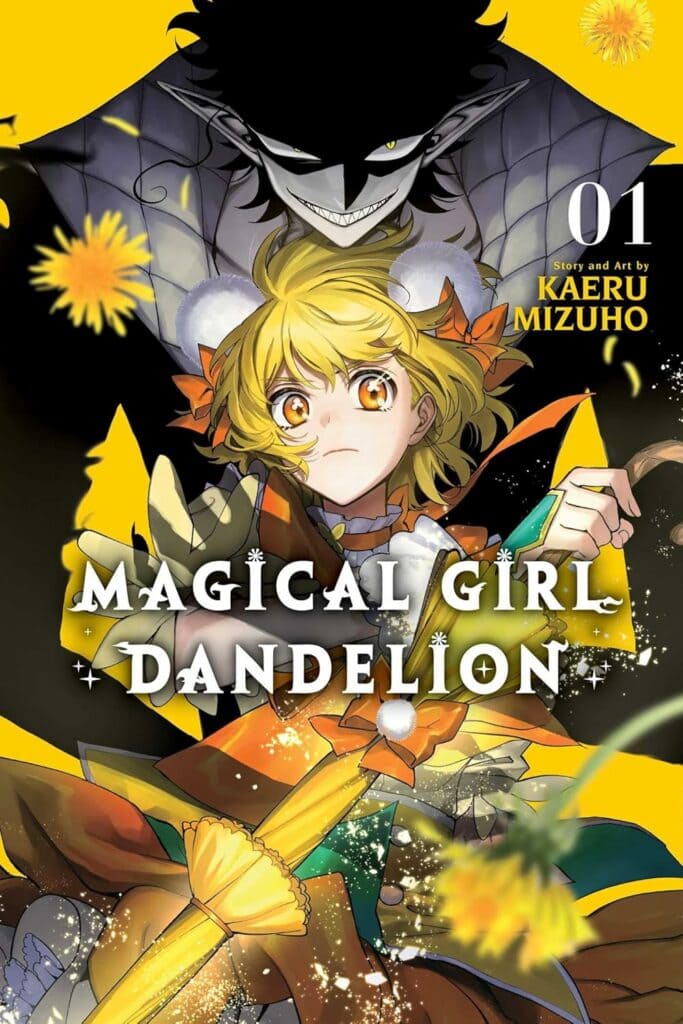
Magical Girl Dandelion
By Kaeru Mizuho
In a world where magical girls are a rare but well-established part of society, these girls fight against monsters known as fiends. But not every fiend is villainous.
Ever since her parents died, Tanpopo has had a constant companion in a fiend named Shade. Wishing to be like her dear friend and protector, Tanpopo has dreamed of being a magical girl. But when that fateful day finally comes, and Tanpopo blooms into Magical Girl Dandelion, tensions rise between her and Shade. Can a warrior of light and a demon of shadows continue to be the best of friends?
Magical Girl Dandelion is a dark magical girl series in a similar vein to the aforementioned Madoka Magica. The world it takes place in is similar to My Hero Academia, where heroes are common enough that there are established government and business entities involved in their existence.
At the risk of comparing Magical Girl Dandelion to too many other manga, I was also reminded of Demon Slayer as I read the manga. The world Tanpopo inhabits is dark and merciless, and it’s her grace and mercy that often save the day. She may have an über-powerful laser-shooting umbrella, but it’s her wisdom in how she uses that über-powerful laser-shooting umbrella that makes her a hero.
Shade, in contrast, cynically accepts the harsh reality he lives in, having experienced much of it firsthand. He starts the series viewing Tanpopo as a naive little girl who he must protect at all costs, even if that means lying to her or hurting her. However, time and again, Tanpopo proves herself to be an emotionally strong girl whose stubborn belief in what is right allows her to make miracles happen.
Like Madoka Magica before it, Magical Girl Dandelion uses dark themes to make the light of hope shine that much brighter. With intriguing characters and a strong understanding of what magical girl stories are all about, Magical Girl Dandelion is a manga I highly recommend.
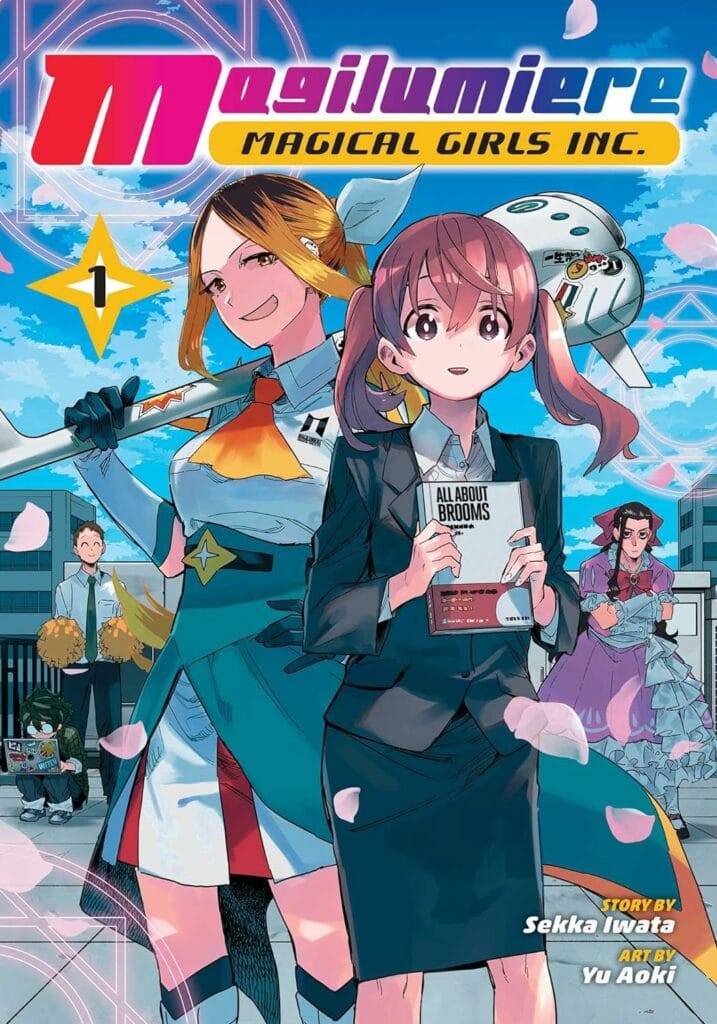
Magilumiere Magical Girls Inc.
By Sekka Iwata
Magilumiere Magical Girls Inc. takes the “magical girls as an established part of society” concept even further. In this series, what makes someone a magical girl is merely employment at a magical girl service company. These girls somewhat act like an advanced pest control, dealing with supernatural pests known as kaii.
In this world, Kana’s excellent memory and attention to detail make her an exceptional candidate for the titular Magical Girls Inc.—that is, after her repeated failures at obtaining more normal jobs. These failures have left Kana with low self-esteem, but she quickly finds acceptance and encouragement from her new employer and co-workers. This little startup company forms a found-family for Kana, in contrast to the cold efficiency of larger magical girl corporations.
Magilumiere‘s critique of large, hypercapitalist corporations is a central theme. In most magical girl series, the source of monsters showing up every chapter is usually some evil wizard trying to take over the world, but in this series, it’s the negligence of corporate and governmental entities that causes the kaii to appear like natural disasters.
Magilumiere is a bit reminiscent of the TV adaptation of The Boys. This isn’t a satire of magical girls, it’s satirizing the cruelty of unbridled capitalism through the medium of super-powered beings. Although that’s where the similarities begin and end, since in terms of tone, Magilumiere has much more in common with your average magical girl manga than any sort of dark satire of superheroes. The previously discussed Magical Girl Dandelion, by comparison, has a far heavier and more oppressive tone than Magilumiere, even if both series are ultimately hopeful and bright—and far more appropriate for a teen audience.
Magilumiere is a series that shows a great deal of love for magical girls and a great deal of frustration with the corporate culture of Japan, and those frustrations translate really well for an American audience. Give it a try!
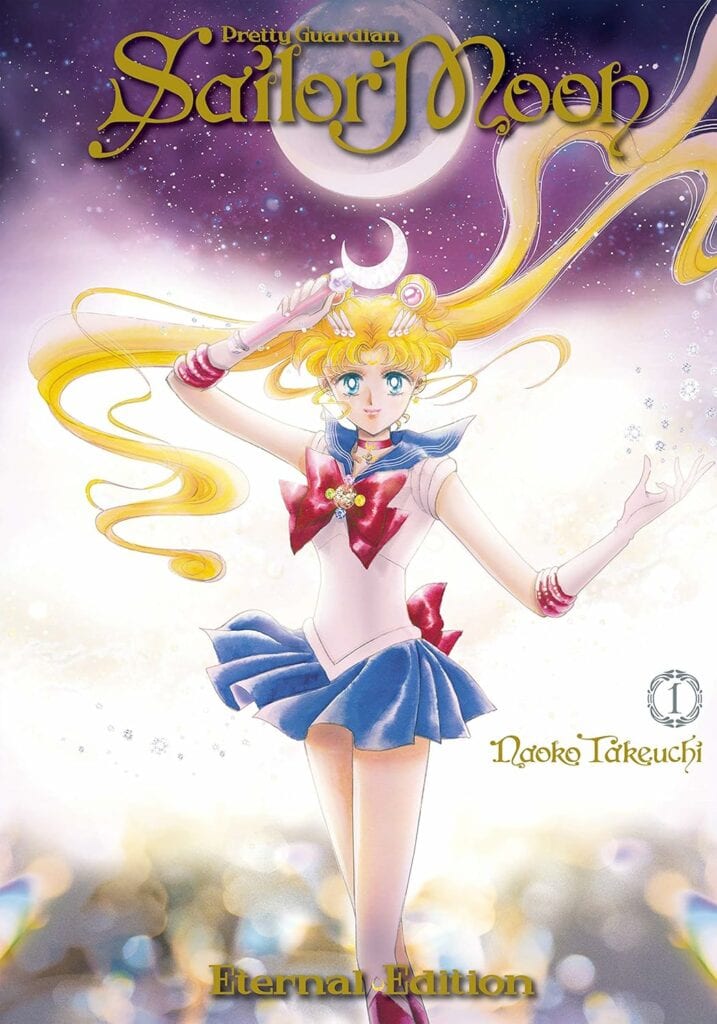
Pretty Guardian Sailor Moon: Eternal Edition
by Naoko Takeuchi
The woman, the myth, the legend, Sailor Moon makes her return in these expanded volumes with additional pages and new content.
If you’re new to Sailor Moon, here are the basics: Middle schooler Usagi discovers that she is the reincarnated Princess of the Moon Kingdom, tasked with protecting the Silver Crystal from the forces of evil. She is soon joined by Ami, Rei, Makoto and Minako, who are the reincarnated princesses of Mercury, Mars, Jupiter and Venus, respectively.
Sailor Moon is far from the first magical girl manga, but it became highly influential for the way it incorporated elements from Super Sentai, the live-action superhero franchise that was adapted into Power Rangers here in the US. The iconic transformation sequences that magical girls are known for today were inspired by similar sequences in these live-action tokusatsu shows, and the two genres have gone back and forth, escalating the complexity and awesomeness of these sequences ever since, like a playful sibling rivalry.
One of the other things Sailor Moon is known for is the relationship between Haruka and Michuru, otherwise known as Sailor Uranus and Sailor Neptune, respectively. The romantic and sexual aspect of their relationship can only barely be called subtextual. They’re among the most influential sapphic couples in anime and have inspired many similar relationships in Japanese and American media.
And then there is Sailor Moon herself, Usagi Tsukino. You don’t often see people cite Usagi as their favorite Sailor Scout, but she’s a symbol of what makes this manga, and the magical girl genre as a whole, so special.
In the late 1800s, a phrase was coined to describe the ideal Japanese woman: “Good Wife, Wise Mother.” The expectation was for girls and women to be quiet, demure and obedient. As a result, much of the media made by women and aimed at girls pushed back against that idea for the last 100+ years.
Usagi is a lazy, gluttonous crybaby, and that’s why she’s the best. Author Naoko Takeuchi points to this girl and says, “This is a hero.” And she’s right. Usagi might be a lazy crybaby, but she’s also incredibly brave and willing to endure anything for her friends. Simply by being herself, Usagi challenges the idea that a girl has to be perfect to have value.
All of these are reasons why Pretty Guardian Sailor Moon thoroughly deserves its spot as a classic worth remembering.