
Stream Anime At Fountaindale: Pokémon, Yu-Gi-Oh!, Lupin III and More!
In addition to books, DVDs and other physical media, Fountaindale offers streaming apps and devices to bring you stories ranging from hit blockbusters to obscure indie darlings. And this generous spread includes a ton of anime! Below, I’ll try to give you an idea of the wide variety of stories on offer, while also highlighting some of my personal favorites and popular curiosities. These recommendations will range from wholesome child-friendly fun to violent, adult animation, so pay close attention to the descriptions before you put one on for the family.
To stream on apps like Kanopy and Hoopla, all you need is a Fountaindale library card! For titles streaming on Disney+, Hulu and Netflix, place a hold on one of our Roku + Hotspot kits. Finally, titles on Tubi are available for free with ads via their website and app.
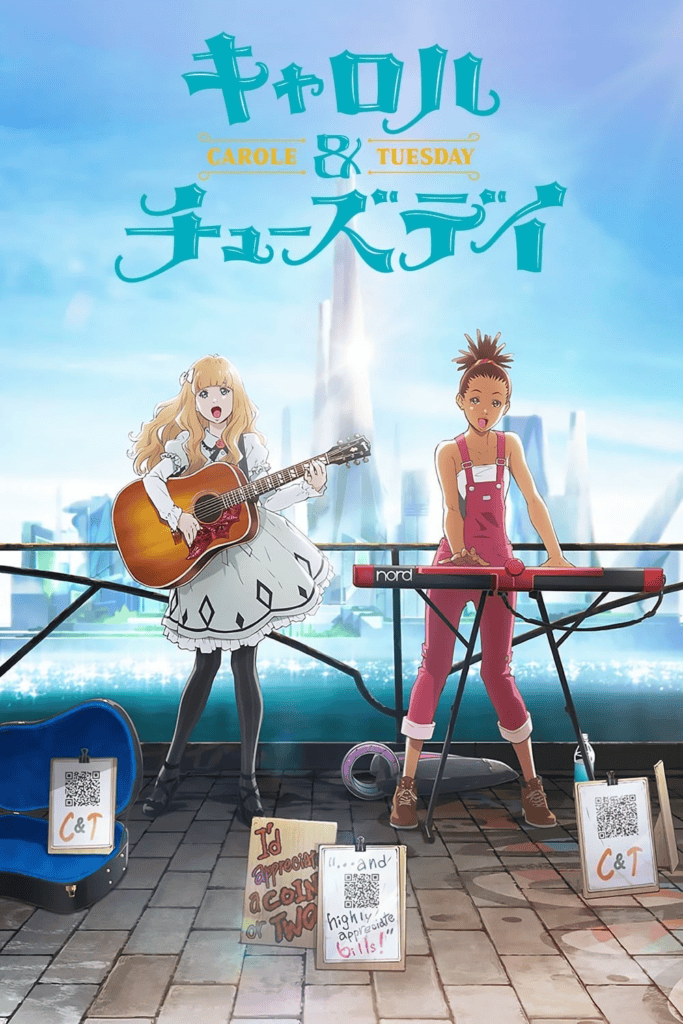
Carole & Tuesday
Directed by: Shinichiro Watanabe and Motonobu Hori
Written by: Deko Akao
Studio: Bones
Music by: Mocky
Featured Voice Actors: Jeanie Tirado and Briana Knickerbocker
Original release: April 2019–October 2019
Episodes: 24
Streaming on: Kanopy and Netflix
For many anime fans, I could simply say “from the director of Cowboy Bebop,” and they’d be sold. Shinichiro Watanabe brings a strong authorial voice to any work he directs, and it’s a voice that’s deeply influenced by cultures around the globe. However, no cultural influence stands out more in his work than Black culture.
This is seen most clearly in the music incorporated into his work, whether that be the smooth jazz of Cowboy Bebop or the hip-hop of Samurai Champloo. Carole & Tuesday is no exception. The music is composed by Canadian artist Mocky, who brings his own interpretation of jazz, hip-hop, rock and pop to the series.
The titular Carole and Tuesday are two young ladies trying to make their way as musicians on a terraformed Mars. Carole is a refugee from Earth, while Tuesday is a wealthy politician’s daughter. The girls attempt to become famous across the solar system while anti-immigration politics take hold of Mars.
Yet, much like Watanabe’s other work, this simple description of the premise and its underlying message doesn’t do justice to the experience of watching the series. This is a highly character-driven story. The plot and its message are compelling, but the thing that will keep you coming episode after episode is the people who make up Mars’s population.
Carole & Tuesday also stands out as one of the most diverse anime I’ve ever seen in terms of race, body type and visibly queer characters. In addition to our Black lead getting top billing in the show’s title, the series is filled with characters with different skin colors, hair textures, ethnicities, shapes and sizes.
Carole & Tuesday features Watanabe’s greatest strengths as a director, bringing yet another unique anime to an industry that often prefers the comfort of familiar stories and themes. I highly recommend checking it out.
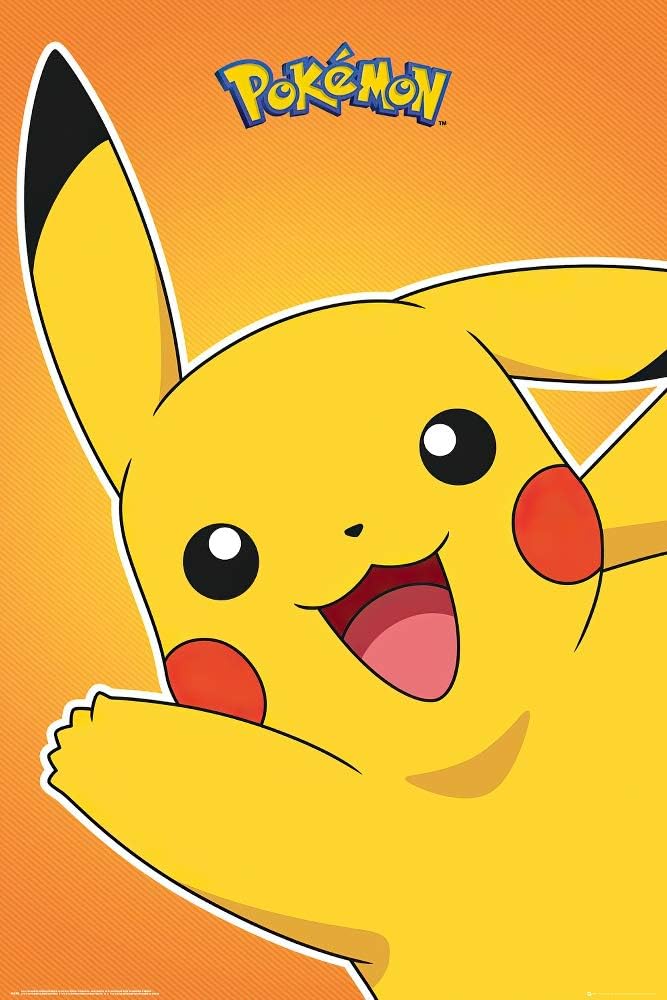
Pokémon BingePass
Directed by: Kunihiko Yuyama
Studio: OLM
Featured Voice Actors: Veronica Taylor and Sarah Natochenny
Storylines: “Ruby and Sapphire” and “Diamond and Pearl”
Original run: November 2002–September 2010
Episodes: 380
Streaming on: Hoopla
With a single borrow from Hoopla, you can access 8 seasons of the classic Pokémon anime! Follow along with Ash Ketchum as he travels the Pokémon World, region by region, with his trusty Pikachu.
The Pokémon BingePass offers seasons 6–13, covering the Ruby/Sapphire and Diamond/Pearl storylines. Season 6 introduces May and her Torchic, who are still my favorite of Ash’s traveling companions to this day. They travel with Ash across the Hoenn region (also still my favorite), along with May’s little brother Max and a returning Brock. Season 10, meanwhile, introduces fan favorite Dawn and her Piplup as they travel across the Sinnoh region. May and Dawn take on a new side of Pokémon training while Ash takes on the gym leaders of each region in his quest to become a Pokémon Master.
Ash’s character varies greatly across the 1,000+ episodes of the original Pokémon anime. The R/S and D/P storylines are arguably when he comes across the most like a seasoned Pokémon trainer—one who has grown from his previous travels and is showing signs of the master he’ll one day become.
Hoopla’s BingePasses provide a large amount of digital content for a single credit from your monthly 21-credit allowance. These collections can range from full seasons of television shows, such as Doctor Who or The Librarians, to streaming services such as Curiosity Stream and Hallmark+. Anime fans should also check out the RetroCrush BingePass!
For other seasons of Ash’s Pokémon journey, take a look at our DVD collection. And for the adventures of new characters like Liko and Roy, check out Pokémon Horizons on Netflix!
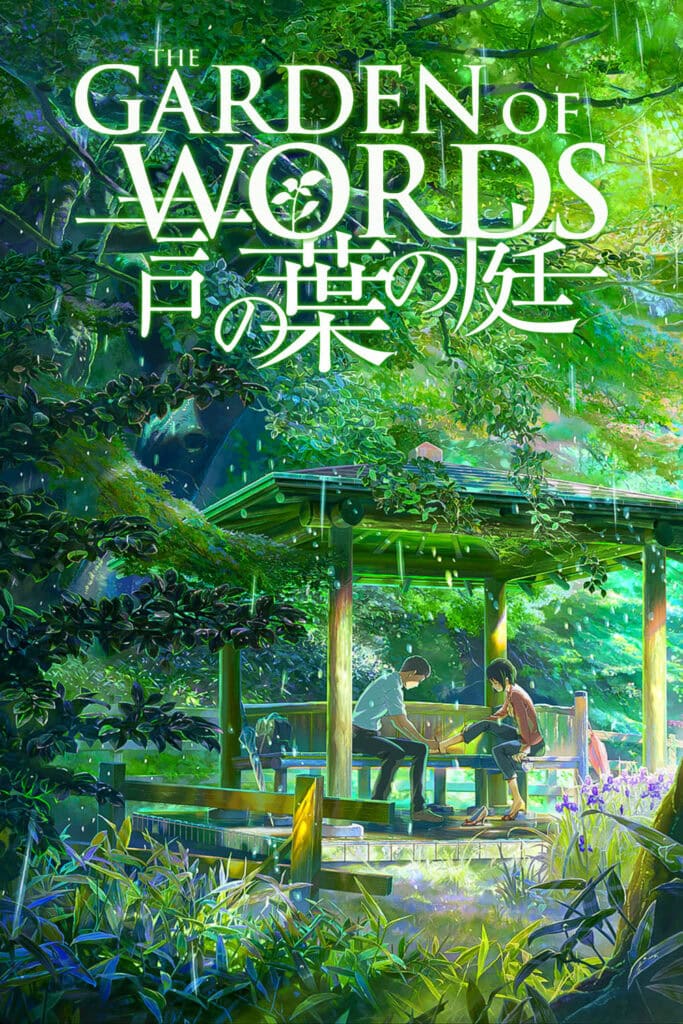
The Garden of Words
Written and directed by: Makoto Shinkai
Studio: CoMix Wave Films
Music by: Daisuke Kashiwa
Featured Voice Actors: Patrick Poole and Maggie Flecknoe
Original release: May 31, 2013
Runtime: 46 minutes
Streaming on: Kanopy
Before Makoto Shinkai’s hit film Your Name, there was The Garden of Words. High school boy Takao, feeling listless and adrift, skips his morning classes during the rainy season. He finds refuge in Shinjuku’s National Garden. But when he goes to his usual spot under the canopy of a gazebo, he finds someone already there.
She’s an older woman who’s skipping work, drinking beer and eating chocolate. He doesn’t know her name—not even after they start talking and bonding over their mutual feelings of isolation. Nevertheless, that bond ends up being life-changing for both of them.
As the name suggests, the themes of The Garden of Words are steeped in language. The Wikipedia entry on the film is well-sourced and very thorough, so I recommend checking it out to learn about the themes in greater depth. But the short version is that the film is about the meaning of love. It strips away selflessness and purity of love, looking at it as a selfish yearning—something that can be just as ugly as it is beautiful. And though these themes are inherently Japanese, I believe you will find they are universal themes that transcend language and culture.
This challenging story is supported by intricate and experimental animation. New coloring techniques were developed to authentically mimic the way light refracts against skin. The animation is a complex mixture of hand-drawn animation, rotoscoping and CGI. The backgrounds, for example, are meticulously hand-drawn while using photographs of the real-life Shinjuku National Garden as a base.
This is my absolute, all-time favorite movie, with a unique and compelling story and animation that is beautiful and technically marvelous. I can’t recommend this one enough.
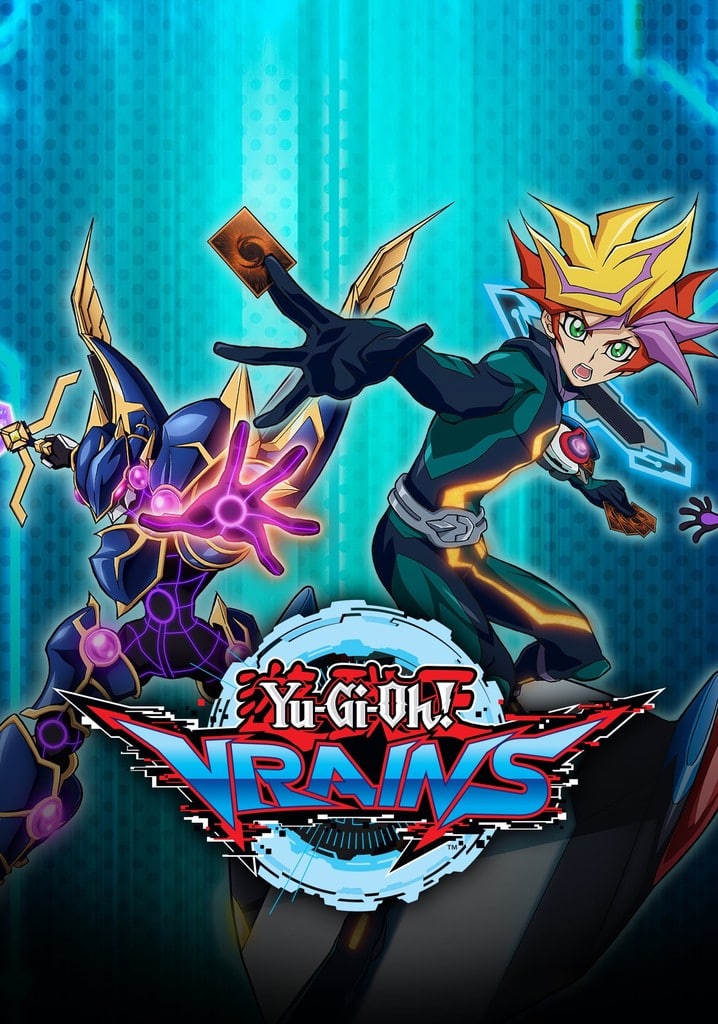
Yu-Gi-Oh! VRAINS
Directed by: Masahiro Hosoda, Katsuya Asano, Kimiharu Muto
Written by: Shin Yoshida and Masahiro Kikokubo
Studios: NAS and Gallop
Featured Voice Actors: Jake Paque and Marc Thompson
Original run: May 2017–September 2019
Episodes: 118
Streaming on: Kanopy, Hulu, Disney+ and Tubi
This year marks the 30th anniversary of Yu-Gi-Oh!‘s Japanese manga release. What started as a quirky spin on battle manga—forgoing martial arts in favor of magically-enhanced games of death—has evolved into a global phenomenon. VRAINS is an unabashed celebration of that phenomenon.
Ever since the original series introduced hyperrealistic holograms that allowed the characters to interact with their trading cards, subsequent series have tried to up the ante. VRAINS is the culmination of this, with the players fully immersing themselves in a virtual world.
Our lead is Yusaku Fujiki, known in the virtual world as Playmaker. His cards are heavily influenced by 90s hacker movies such as The Net, The Matrix and, of course, Hackers. The other noteworthy thing about his deck is that it uses every type of special summoning the game has introduced over the years. Fusion and Ritual summonings like in the original series, Synchro summoning like in 5D’s, Xyz summoning like in Zexal and so on. The show brings the whole history of Yu-Gi-Oh! together while also bringing in its own brand-new mechanics, such as Link summoning.
The bulk of Yu-Gi-Oh!‘s screentime is the card duels, and VRAINS has some of the best. Arguably, the franchise’s biggest weakness was the slow pace, which had some duels drag on for more episodes than necessary. VRAINS has all but perfected the pacing of these duels, bringing some of the most exciting fights the franchise has ever seen. This show also features some of my favorite voice acting in the franchise, with Player’s English voice very reminiscent of Dan Green’s classic Dark Yugi voice.
Despite having no narrative connection to the original manga, VRAINS still provides a delightful nostalgia trip while also bringing many new things to the franchise. It’s among my favorite Yu-Gi-Oh! spin-offs, and I highly recommend it.
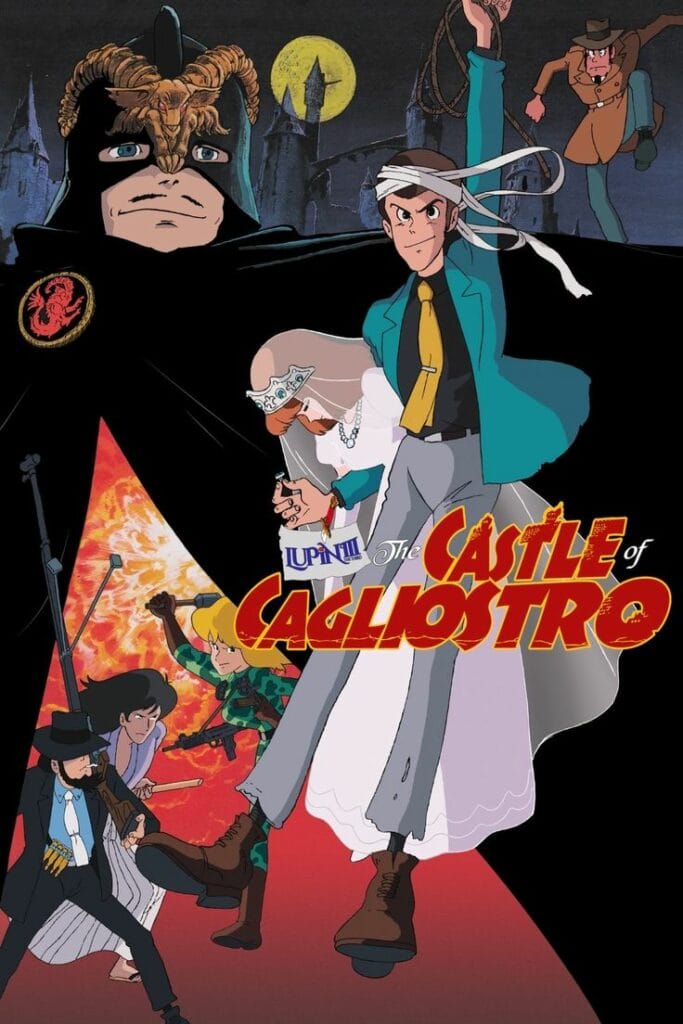
Lupin III: The Castle of Cagliostro
Director: Hayao Miyazaki
Written by: Hayao Miyazaki and Haruya Yamazaki
Music by: Yuji Ohno
Studio: TMS Entertainment
Original release: December 15, 1979
Runtime: 100 minutes
Streaming on: Hoopla
This 1979 film is the culmination of Hayao Miyazaki’s tenure with the Lupin III franchise and serves as his directorial debut. Starring the grandson of the original Arsene Lupin, The Castle of Cagliostro has our gentleman thief happen upon the runaway Princess Clarisse as she tries to escape the villainous Count Cagliostro.
The classic charm of Miyazaki’s animation is on full display here, though with a much more structured and conventional plot than what he would become known for at his peak. In a way, it shows his mastery of the rules he would later go on to bend and break.
This is also one of the most family-friendly takes on Lupin, heavily toning down the character’s usual lecherousness. Miyazaki’s Lupin is also the most gentlemanly and heroic he’s ever been. But despite these deviations from the original formula, Castle of Cagliostro is still one of the most well-regarded films in the franchise thanks to the masterful work of Miyazaki and crew.
Whether you’re interested in checking out the Lupin III franchise or you’re a big Miyazaki fan, I highly recommend giving this movie a look! And if you’re interested in a more mature take on Lupin that more closely resembles the original manga, check out Jigen’s Gravestone, also on Hoopla!
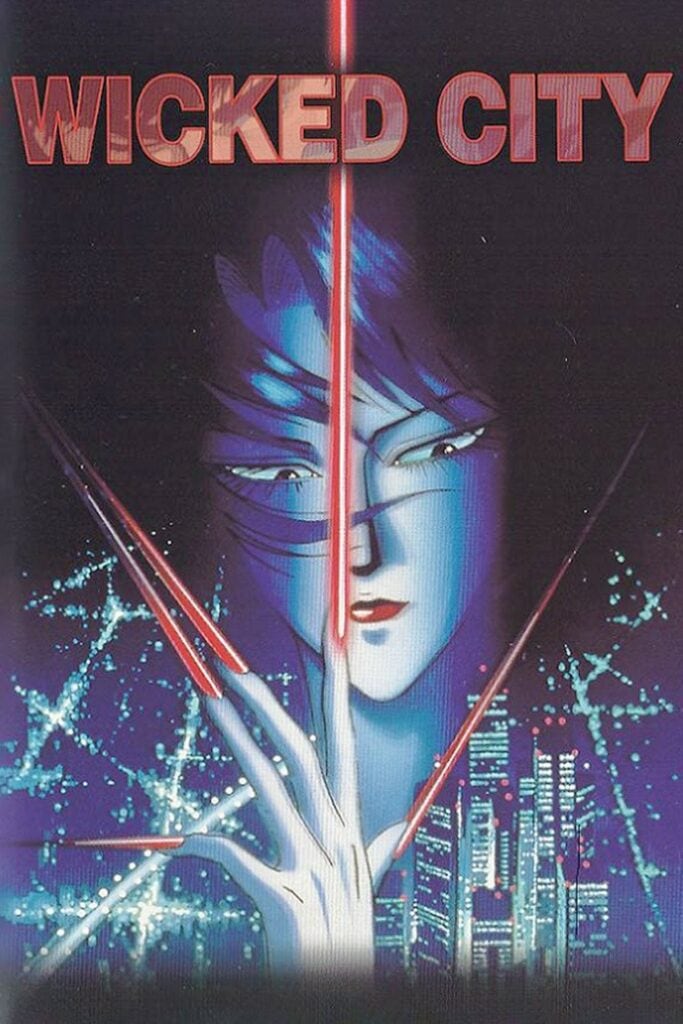
Wicked City
Director: Yoshiaki Kawajiri
Written by: Norio Osada
Studio: Madhouse
Original release: April 19, 1987
Runtime: 82 minutes
Streaming on: Kanopy, Hoopla via RetroCrush BingePass and Tubi
Hey, so, remember when I said I’d be recommending some violent, adult animation? Well, here we go.
Back in the 1980s, Japanese animation was starting to get a foothold in American culture. Mech anime like Voltron and Star Blazers could be enjoyed by children, but featured intense, dramatic stories that could appeal to adults, too. At the same time, these all-ages shows found their niche on American television, VHS was the home of something else entirely.
Presenting gore and sexual violence in beautifully rendered animation, these uncomfortable and often offensive films were nonetheless pivotal in establishing anime’s place in American culture. Fascination with these obscenely adult animations helped keep anime alive in the US until cultural juggernauts like Dragon Ball and Pokémon came along and cemented the medium’s status as a part of our modern global culture.
I think that makes these kinds of stories worth talking about, even if their content can be problematic from a sociopolitical perspective. But if the historical significance of movies like Wicked City doesn’t move you, then I’ll paraphrase some advice from the great John Waters: sometimes you just gotta see a messed-up movie.
This one’s for the connoisseurs of ultra-violence. Wicked City—known in Japan as Yoju Toshi—takes place in a world that’s divided between the demon realm and the human realm. The balance between the two is maintained by a Men in Black-like organization known as the Black Guard. Our lead is a Black Guard named Taki, and the film opens with him sleeping with a woman who suddenly turns into a spider-demon while they’re in bed. So that does a pretty good job of setting the tone of the movie.
Your reaction to that description is pretty much everything you need to know to decide if you want to watch this movie. The film gets more debaucherous and sadistic from there, but it’s not without moments of peace and beauty. Taki’s budding romance with the female lead Makie is genuinely moving, and the film ends on a surprisingly sweet and hopeful note. It’s just that the road getting there is really rough.
But that’s part of the appeal of Wicked City. There’s a macabre beauty in how terrifying demons and horrific acts are so skillfully animated. Wicked City stands out among its contemporaries for its gorgeous art direction by Kazuo Oga, who would go on to work on My Neighbor Totoro the next year. The same skills that made Totoro so beguiling are present in Wicked City, making its dark neo-noir setting tempting to inhabit despite the danger and grotesquerie.
If you’re an aficionado of violent films, Wicked City is a must-watch. If you’ve ever been curious about the trend of hyper-violent anime from the 80s, Wicked City is one of the more digestible examples. All-in-all, if you want to see some animated gore backed up by a pretty good story, I highly recommend Wicked City.