
Tales of Lara Croft: A Tomb Raider Retrospective
At the end of 2025 Netflix released the second season of Tomb Raider: The Legend of Lara Croft. Like many recognizable 90s characters, Lara has seen multiple reboots, re-imaginings and adaptations throughout the decades. This new iteration attempts to bridge the gap between these different versions, and in doing so brings together some of the best parts of Lara Croft and the Tomb Raider franchise.
The Legend of Lara Croft brought back fond memories of watching a friend play through the original trilogy of Tomb Raider games on the PlayStation. So I wanted to take you for a walk down memory lane and look at the different ways Lara Croft has been presented over the decades. We’ll be talking about video games, comics and movies, so we’ve got a little something for everybody.
As always, everything I’ll be talking about is available in Pinnacle’s collection. This includes Legend of Lara Croft which you can watch with one of our Roku + Hotspot kits!
Tomb Raider I-III Remastered and IV-VI Remastered
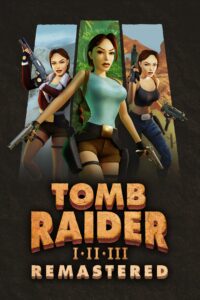 The original hexology of third-person action-adventure games, conveniently collected in two volumes. Make your way through environmental puzzles and gun down dinosaurs and mercenaries on your quest for various artifacts.
The Remastered series strikes an excellent balance in prettying up the old PlayStation graphics without losing the original aesthetics. The aim was to make the games look the way fans like me would look back on them with nostalgia goggles, and in my mind they certainly succeeded. So in that regard this game is probably going to be most appealing to those around my age who grew up with the series, or those who are interested in seeing a piece of gaming history.
If you want to see the game as it really was, you have the option to play the game with the original graphics. You can also choose between the original “tank” controls where movement is relative to the direction the character is facing, or modern controls where movement is relative to the camera angle. Although the “modern” controls seem to be based on the controls from the later PlayStation 2 titles like Angel of Darkness, so they’ll still take some getting used to for new players.
Other modern improvements include health bars for bosses, a visual indicator for interactable items and the ability to save your game at any time. There is no auto-save, though, so keep that in mind as you play.
There aren’t much more quality-of-life changes beyond that, so these games might take some getting used to. Platforming on old PlayStation games is really tight, with very little margin for error. I highly recommend playing around in the tutorials until you get used to whichever control scheme you prefer. Thankfully the first two games have really fun tutorials where you get to run around the Croft mansion.
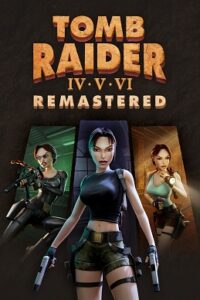 Yes, Lara has a mansion. In the first trilogy we don’t know much about Lara other than she’s a bored British noble who pursues archeology and adventure to escape the drudgery of aristocratic life. She’s cool, sexy and irreverent, as was the style for video game protagonists at the time. These games hint at greater depth behind the character but are predominantly focused on showing the player what a baddie she is.
The fourth, fifth and sixth games dive deeper into the tragedy of Lara’s past and see her engaging in darker adventures, culminating in her being accused of murder in the final game in the collection. It’s easy to see the crumbs that would eventually lead to the 2013 reboot of the franchise. But we’ll get more into that in a later section.
The second half of the hexology was criticized at the time for being too similar to the earlier games, but I enjoyed the refined mechanics and more complex stories. For that reason, new players might be better off skipping ahead to the second collection. The original trilogy is going to be best enjoyed by long-time fans and those interested in the history of gaming.
Tomb Raider Colossal Collection
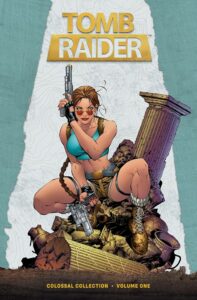 Next we have one of the first adaptations of Lara Croft’s adventures: Tomb Raider, Starring Lara Croft. This series ran from 1999 to 2003 and was published by Top Cow; an imprint from Image Comics. At the time Top Cow was known for the Witchblade comics—another series featuring sexy women going on cool, mystical adventures—so it seemed like a perfect fit for the adventures of Lara Croft. The imprint is better known nowadays for Sunstone, a series of BDSM romantic comedy comics.
The Colossal Collection is published by Dark Horse, who also publishes the more recent Tomb Raider comics. As the name suggests, the Colossal Collection aims to collect every single Tomb Raider comic, starting with the Top Cow series. Volume 1 contains issues 1–24 and 26–34. Issue 25 is missing due to a team-up with the aforementioned Witchblade.
These comics are written by Dan Jurgens, the creator of Booster Gold and one of the masterminds behind the famous Death of Superman storyline. The art comes from industry giants like MCU concept artist Andy Park and pin-up artist extraordinaire Adam Hughes. So we’ve got a very strong creative time that’s especially suited for making stories about a sexy adventurer.
These comics take everything you know about Lara from the first three games and builds on it in a believable way, maintaining the fun of the character while adding depth and pathos. She’s a woman who has suffered a great deal of loss, and the comic explores this with evocative art and beautiful narration.
These comics are very much of their time. Sometimes that’s expressed in really fun ways, such as the art’s heavy emphasis on depicting Lara as a cool, sexy, strong woman. Other times the Islamophobic politics of the time burst forth in the most jarring ways. The very first issue opens up in Iran and depicts the country as poorly as you’d expect from a comic written in 1999.
Normally I don’t give these kinds of caveats because I want you as a reader to make your own choices about what you’re comfortable with. I think you already know that a franchise whose name is a synonym for “graverobber” isn’t going to be the most culturally sensitive thing in the world. But given how prevalent Islamophobia is in the US, I can’t in good conscience recommend this collection without being honest about its contents.
And despite these comics’ flaws, I most certainly do recommend this collection. It exemplifies a lot of what I love about Lara as a character. It hits the sweet spot of depicting Lara as sexy without reducing her to a sexual object. It shows her as a thrill-seeking rich girl, a hardened adventurer and a thinking, feeling human being. The Colossal Collection features such a well-rounded, multi-faceted depiction of Lara Croft that I have to recommend it to anyone interested in Tomb Raider.
Lara Croft: Tomb Raider
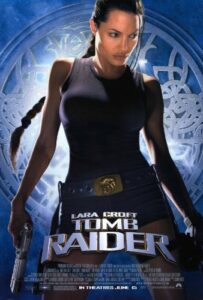 The film adaptation of Lara Croft’s original incarnation, starring the great Angelina Jolie. Like the comics the film adds depth to the character while still maintaining what made her an icon. Jolie seems to be having a lot of fun in the role, bringing a ton of charm to the character. This film came out about midway into Jolie’s career and you can see the beginnings of the amazing actress she would later become.
The action scenes make great use of both practical effects and CGI, leaning harder on the former to bring a sense of weight and realness to the film. These scenes usually feel more like an action thrill-ride than a struggle for life and death, but the predominantly light tone of the film makes its more dramatic moments hit even harder.
Lara Croft: Tomb Raider is a solid action movie with a bit more depth than you’d expect. It’s still one of the best live-action video game adaptations to this day, and it’s one of my favorite pieces of the Tomb Raider franchise. So give it a shot! And check out the sequel, Cradle of Life.
Rise of the Tomb Raider
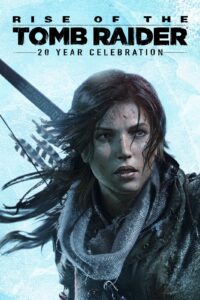 The second installment of the Survivor trilogy, which rebooted the series starting from Lara’s first adventures. Trying to make sense of the supernatural events she experienced in the first game, Lara throws herself into an expedition to the legendary city of Kitezh.
The run-and-gun action of the original is replaced with cover-shooter mechanics, combining stealth with cinematic flair. The tight platforming is replaced with precipitous climbing segments. Despite these changes, the environmental puzzles that have been the core of the series’ gameplay are maintained, ensuring that the Survivor trilogy still looks and feels recognizable as part of the Tomb Raider series.
Story-wise, however, the reboot trilogy is a very different beast.
The Survivor trilogy takes on a deeply somber tone as Lara is forced to take drastic measures to save her friends and keep herself alive. The deaths of both allies and enemies carry more weight, changing Lara as she fights to survive.
The new supporting cast was the highlight of the trilogy for me. Her prior supporting cast was a bit thin, so these new characters give Lara more people to bounce off of and display different facets of her personality.
Rise takes big steps toward bridging the gap between the inexperienced Lara of Tomb Raider: Definitive Edition and the stone-cold baddie from the original series. While Lara is still in over her head, there are several awesome moments where she outwits her enemies. She’s already at the point where she’ll stare down the barrel of a gun without flinching, making it believable that these two series are part of the same continuity.
Rise addresses all of my issues with the first game in the trilogy. The amount of camera shake is now adjustable, helping to ease the motion sickness I suffered from the previous game. Meanwhile the quick time events—context sensitive button presses that spring up suddenly during cutscenes—are less frequent, easier to read and have less gory consequences for failure.
If those issues I’ve named are of no concern to you, then I recommend starting off the Survivor trilogy from the beginning with : Tomb Raider: Definitive Edition. It has a compelling story and a great supporting cast, and it brought a whole new generation of Tomb Raider fans to the franchise. But if you have issues with motion sickness or want to enjoy the sequel’s improved mechanics right away, then jump ahead to Rise. Either way, don’t forget to finish off the trilogy with Shadow of the Tomb Raider!
Tomb Raider: The Legend of Lara Croft
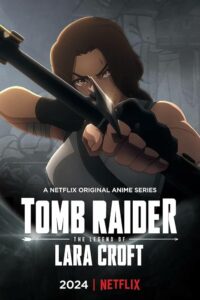 And we’re back to the title that started this whole post off. The Legend of Lara Croft is animated by Powerhouse Animation Studios, who also did the animation for Netflix’s Castlevania and Masters of the Universe.
The Legend of Lara Croft attempts to bridge the gap between the Survivor trilogy and the original series, bringing them together into what’s being called the “Unified Timeline”. This timeline is intended to be the main continuity of the franchise going forward, giving every future game, movie and comic book a common continuity to draw from.
Given the massive difference in tone between the two game series, this is like asking the show to spin straw into gold. And yet I think this series pulled it off better than anyone else possibly could have.
The show errs on the side of the original when it comes to Lara’s characterization, portraying her as a cheeky adventurer who finds the prospect of certain death mildly amusing. It makes sense, given that we were already seeing shades of that personality in Rise of the Tomb Raider. That said, elements of her Survivor portrayal are utilized well, such as her social awkwardness when out of her element or her intense feelings for her friend Sam Nishimura. This Lara still lacks confidence in her place in the world and in her relationships, showing that she still has a ways to go until she’s the hardened adventurer of the 90s games. The show brings together some of the best parts of past characterizations to create my favorite portrayal of the character so far.
Members of Lara’s supporting cast from both continuities make a return, bringing together Jonah from the Survivor trilogy and Zip from the original as Lara’s main supports in the field. New supporting characters bring out new sides to Lara, such as Camilla Roth—her mentor’s daughter and her childhood friend.
Legend of Lara Croft brought back a lot of fun and over-the-top action to the franchise, but there’s still plenty of angst to be had for the Survivor trilogy fans. This show combines the best elements every continuity to create one of my favorite pieces of media to bear the name Tomb Raider.