
Sensational Craft: Rubber Band Painting
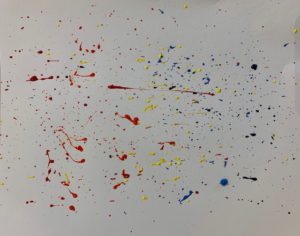 Last month I showed you how to have a mess-free sensory art experience. Well, this month is quite the opposite! So grab your smocks or old clothes, cover your table (and maybe your floor), and get ready to make a sensational mess! I’m going to show you how to create process art. This means that it’s all about the process or experience, and not so much about the outcome. Of course, in this case, the outcome is pretty awesome. Don’t you think?
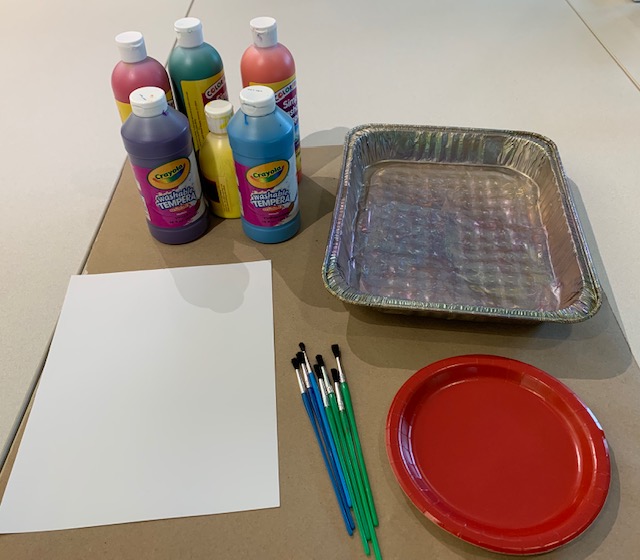
SUPPLIES
Here’s what you need:
- Disposable pan or baking pan (large enough to fit a piece of paper)
- Paper
- Large rubber bands
- Paint
- Paintbrushes
DIRECTIONS
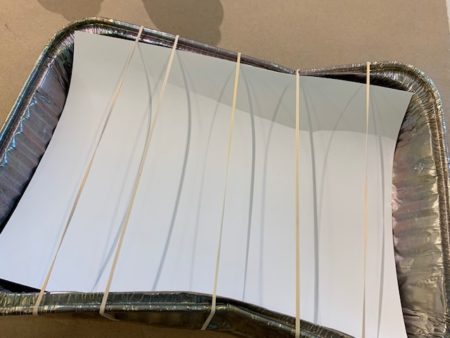
STEP 1. Set up your painting pan
Your first step is to place the paper inside the pan. It’s ok if it’s not a perfect fit. Then place your rubber bands around the pan.
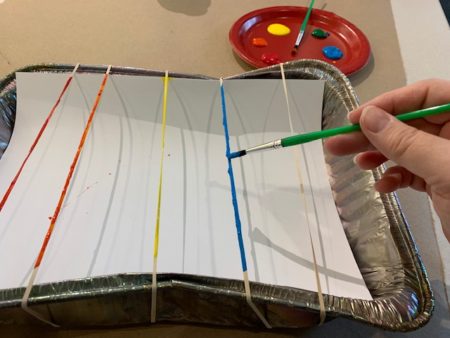
STEP 2. Paint the rubber bands
Now it’s time to paint the rubber bands. You’ll want to make sure that you kind of goop the paint on, so there’s a lot of paint on each rubber band. It will splatter better that way. You might need to work fast, so the paint doesn’t dry too quickly.
STEP 3. Snap the rubber bands
Once the rubber bands are full of paint, it’s time to get painting! One by one, pull a rubber band and let it snap. The paint will splatter all over the paper (and probably on the table and your arm, which is why you need the table covering and old clothes).
You can experiment with how you pull the rubber band. What happens when you pull it straight up vs. pulling it away at an angle? Feel free to add more paint to the rubber bands and snap some more. Do this until you are satisfied with your painting.
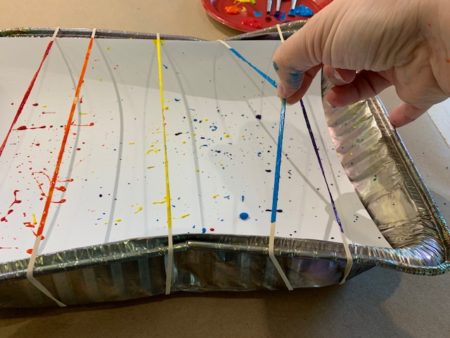
Process art is a neat, beginner-friendly art style because there is no wrong way to do it. If you like your final result as is, great! Hang it on a wall, and you’re all done! You can also cut your paper into shapes and use them as a part of another art project.
REVIEW
What senses are active with this activity?
- Visual: Watch the bright colors mix and blend together as they splatter onto the paper.
- Tactile: Feel the rubber band get taut as you pull it. Feel the paint as it splatters on your hands and arms (and maybe your face too!)
- Auditory: Listen to the twang of the rubber band as you pluck it and splatter the paint. Does it sound different depending on how much paint is on the rubber band? Or how you pull on the band?
- Smell: Does the paint have a scent? Some paints might smell stronger than others.
MORE RESOURCES
Abstract expressionism is an art movement where artists do not necessarily have a subject. They use lines, colors, and shapes to express an emotion. Jackson Pollock was a famous artist who was a part of this movement. He is known for paintings where he splattered or poured paint onto a canvas. One of his famous paintings sold for over $140 MILLION! Can you imagine? Other artists who were a part of this movement include Norman Lewis, Arshile Gorky, Mark Rothko, and Janet Sobel. Here are some of their works.
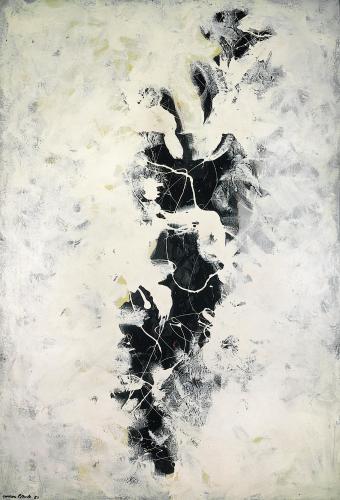
Jackson Pollock, The Deep, 1953
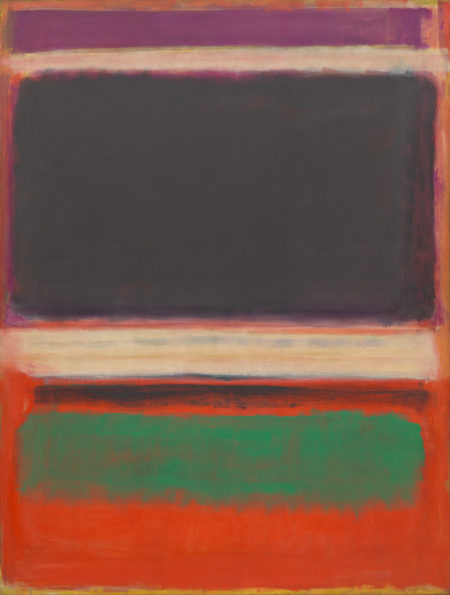
Mark Rothko, No. 3/No. 13 (Magenta, Black, Green on Orange), 1949
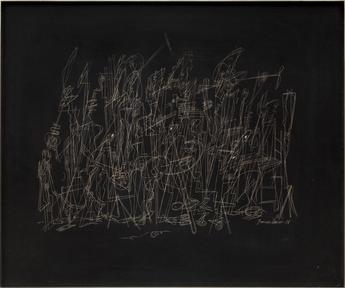
Norman Lewis, Jazz Band, 1948
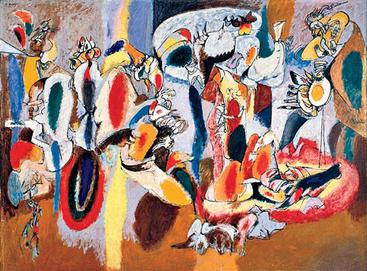
Arshile Gorky, The Liver is the Cock’s Comb, 1944
To learn more about these artists and more, check out these books.
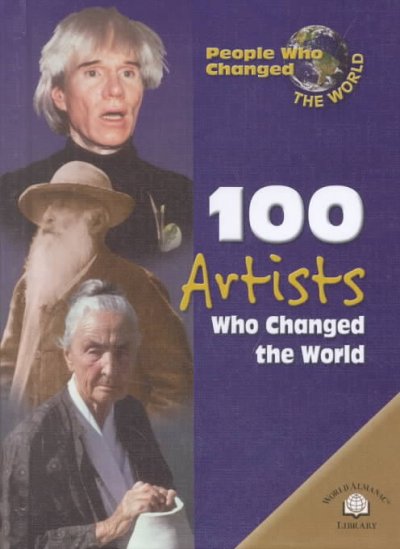
100 Artists Who Changed the World by Barbara Krystal
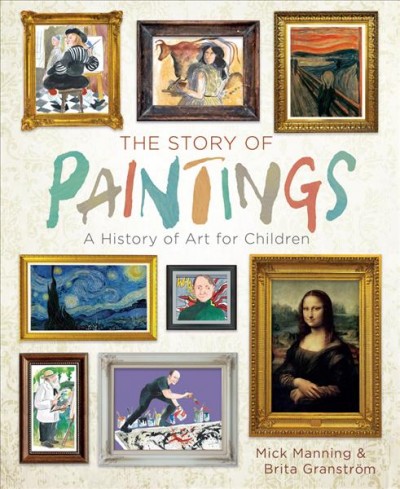
The Story of Paintings by Mick Manning and Brita Granström
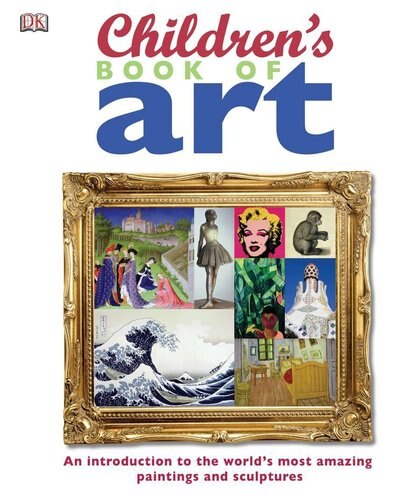
Children’s Book of Art
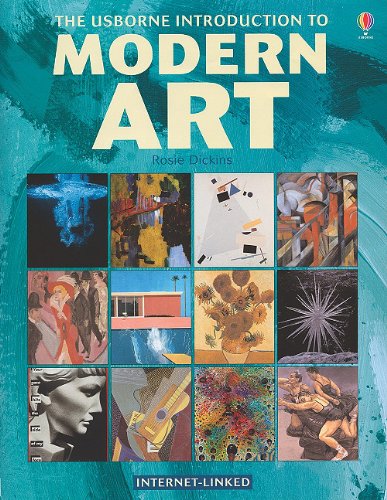
The Usborne Introduction to Modern Art
Now that you have some inspiration from the professionals, these books can help you develop your own techniques!
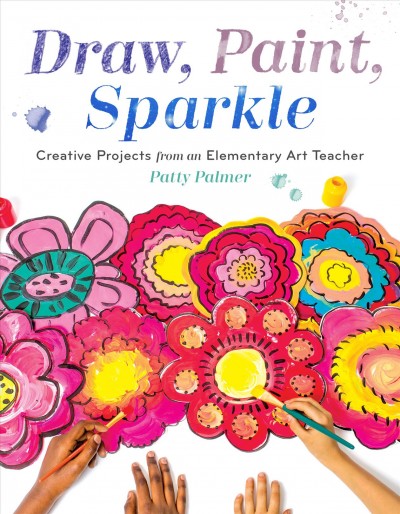
Draw, Paint, Sparkle by Patty Palmer
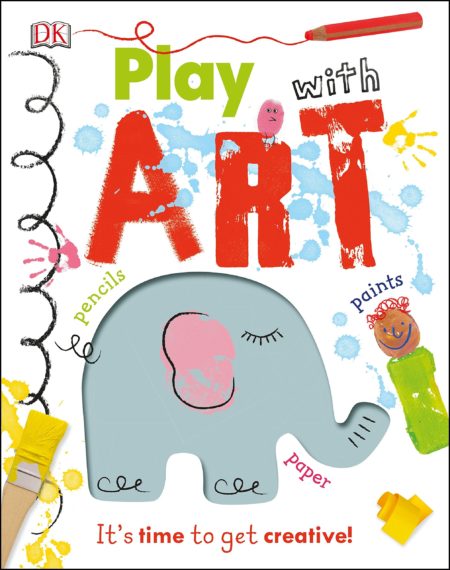
Play with Art
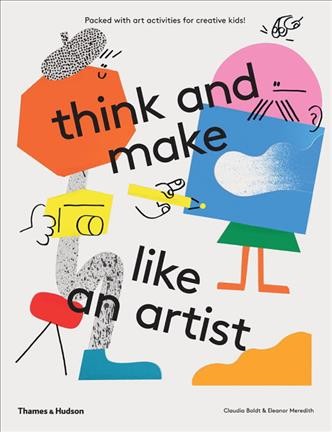
Think and Make Like an Artist by Claudia Boldt and Eleanor Meredith
Just remember, it is all about the process, not the product. So have fun being creative and expressing yourself!